One of the biggest questions surrounding Making Tax Digital for Income Tax has been: what happens at year-end?

One of the biggest questions surrounding Making Tax Digital for Income Tax has been: what happens at year-end?
After already sending client data to HMRC for the quarterly submissions, will accountants have to enter the same information a second time?
In other words, will you have to do the same work twice? Will year-end therefore feel like Groundhog Day?
The short answer is no.
And the upcoming update to TaxCalc’s Tax Return Production ensures that is the case.
It’s been designed to help bring together information already held by HMRC, reducing duplication and helping you move into the year-end process more efficiently.
With the release of our MTD year-end functionality scheduled to arrive in late August, here's an early look at what's coming.
Will I need to enter quarterly data all over again?
No.
We've designed the new functionality so you won't need to re-enter information already submitted to HMRC through quarterly updates.
When you create an MTD tax return, TaxCalc will retrieve this information directly from HMRC, helping to reduce duplication and save time during the year-end process. That means you can still use TaxCalc for year-end, even if the quarterly submissions were made using a different application.
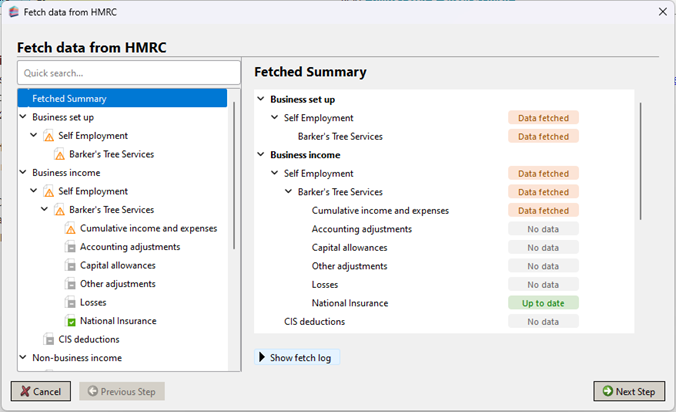
[Above: Fetched Summary showing quarterly business data retrieved directly from HMRC]
What’s new about this update?
The technology involved in MTD tax year-end filing is completely new, with submissions moving from XML gateway to API.
Will it still feel like TaxCalc?
Yes.
We appreciate that MTD is introducing significant changes to the way you work. That's why we've worked hard to ensure the difference is minimal when it comes to your software. Tax Return Production will continue to feel familiar and intuitive.
The aim is simple. When you start using the new functionality, you should still recognise the structure, navigation and straightforward workflow you're used to today.
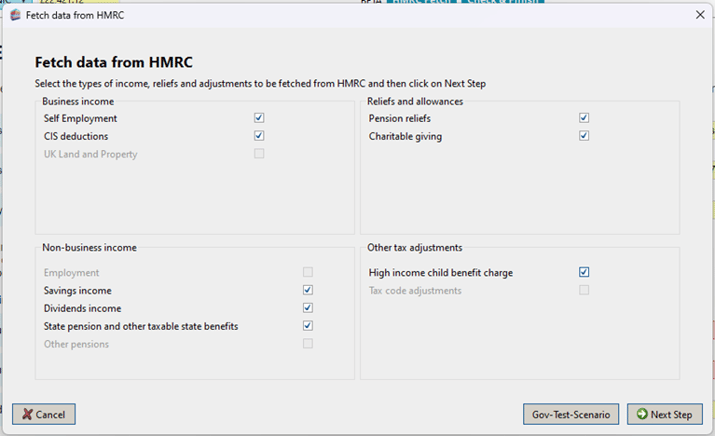
[Shown above: Selecting the information to retrieve from HMRC]
Will I still be in control of the data?
Absolutely.
Information retrieved from HMRC won't simply overwrite data already stored in TaxCalc.
Instead, you'll be able to review information from both sources, compare any differences and decide how you'd like to proceed. Where records need to be linked, TaxCalc guides you through the process and shows clearly when information has been synchronised successfully.
This means you remain in control throughout the process, while benefiting from information already held by HMRC.
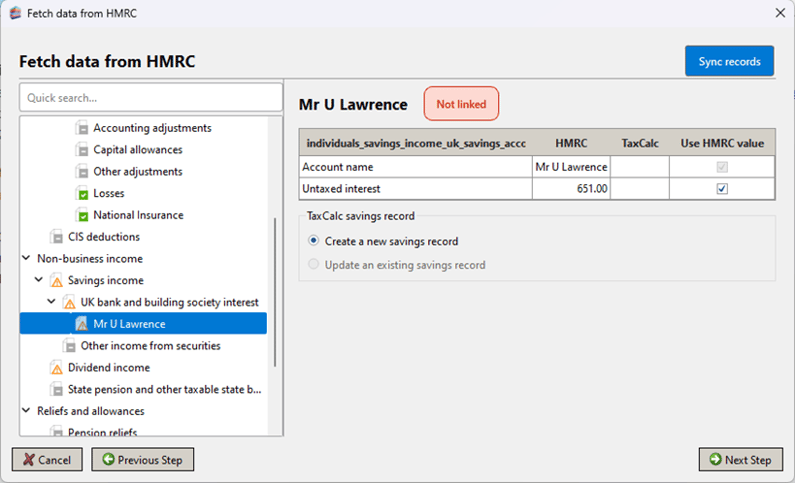
[Shown above: Review and compare HMRC income data before synchronising]
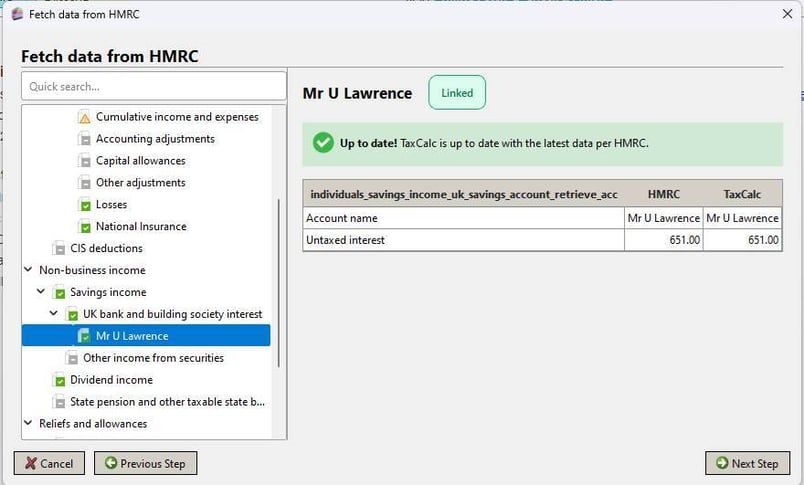
[Shown above: Confirmed synchronisation savings showing TaxCalc and HMRC records aligned]
What information can be retrieved from HMRC?
The new functionality isn't limited to quarterly business data.
TaxCalc can also retrieve a range of information held by HMRC, including savings income, dividend income and other tax-related information, helping to bring relevant data together in one place.
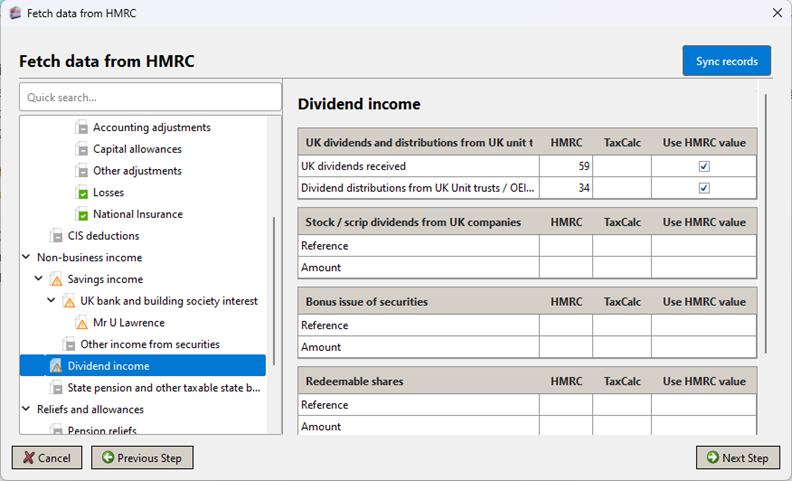
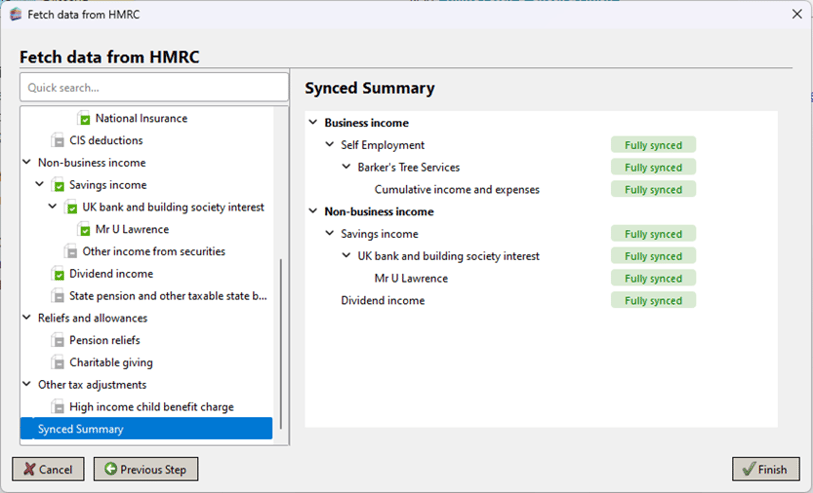 [Shown above: Dividend information retrieved from HMRC and Completed synchronisation showing all retrieved information up to date]
When will it be available?
The first release of the MTD year-end functionality is scheduled to be available in late August and will support core MTD tax return production, including self-employment income.
Additional income types will follow in the subsequent Autumn release, helping to support the wider range of MTD tax return scenarios.
We'll be sharing more information over the coming weeks to help you prepare.