When we asked practices how they'd rate their own readiness going into the first MTD cycle, the answers split into four distinct groups: 25.3% said they were very well prepared, 33.8% said well prepared, 31.2% found gaps emerging as filing got underway, and 9.7% admitted they'd left it to the last minute.
Put another way, nearly four in ten practices went into MTD without the preparation they now wish they'd had.
The disruption gap is real, and it's not subtle
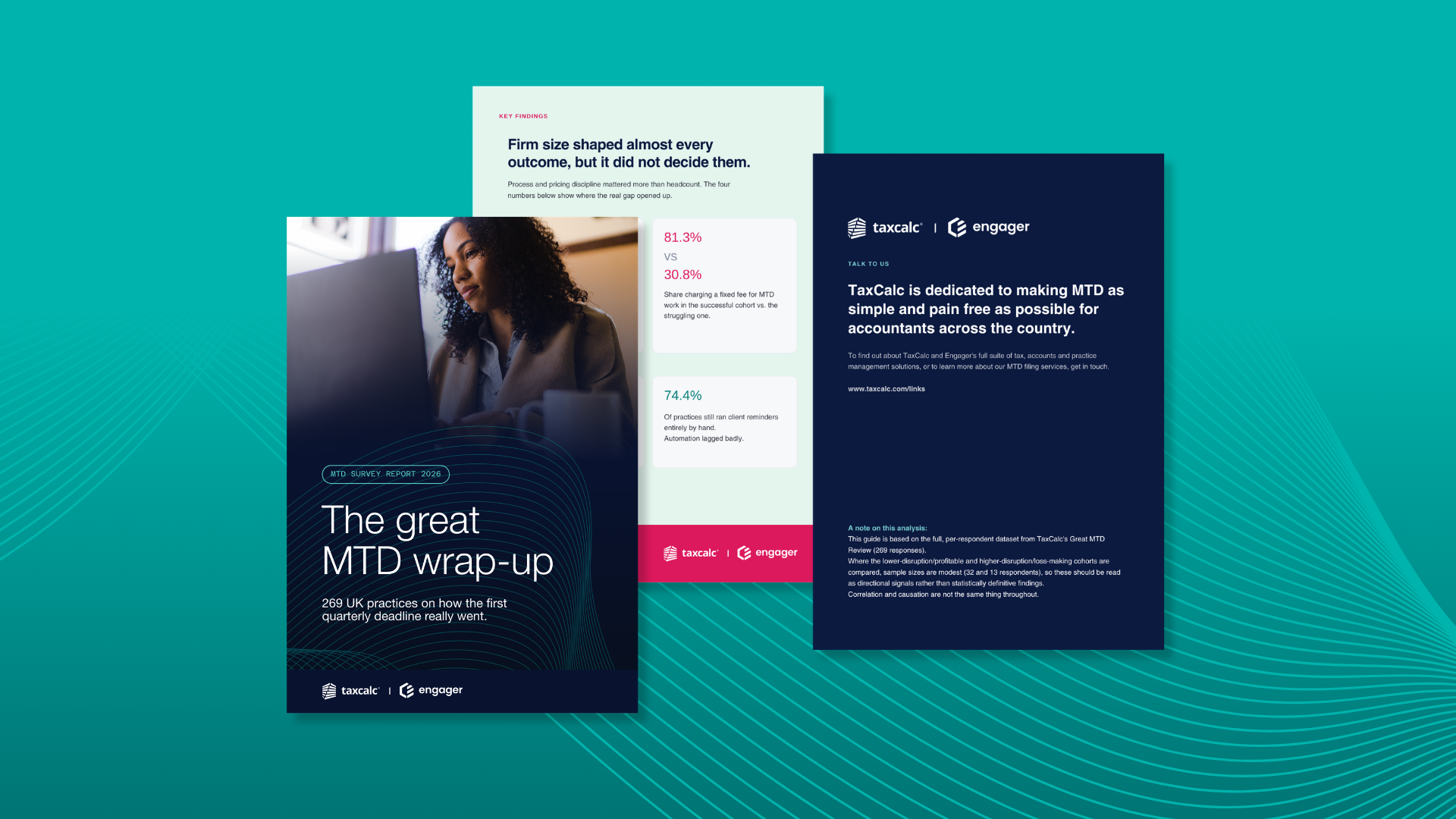
Preparation level tracked almost perfectly with how chaotic practices found the actual filing process. Among practices that rated themselves very well prepared, only 5.9% described their internal process as chaotic. For those who left things to the last minute, that figure jumped to 30.8%, more than five times higher. Manual, unautomated processes were also far more common among the least-prepared group: 96.2% of last-minute firms ran client reminders entirely by hand, compared to roughly three-quarters of better-prepared firms.
Perhaps the most telling number, though, is time. Practices that found gaps in their preparation as the cycle wore on spent an average of 111 minutes per client filing, noticeably longer than the 75 to 76 minutes reported by both well-prepared groups. Poor preparation didn't just create stress; it created measurable, ongoing inefficiency that ate into every single filing.
But here's the twist: more preparation isn't always better preparation
If you assumed the most prepared firms came out on top across every measure, the data has a surprise for you. Practices that rated themselves "well prepared" actually out-performed those who rated themselves "very well prepared" on both on-time filing and first-time success rates. It's a small but genuine finding, and it suggests that how practices prepared may matter more than how far in advance they started. Early planning alone wasn't the differentiator; something else in the more successful group's approach was doing the real work.
What separated the truly resilient firms from the rest?
This is where it gets interesting, and where a simple readiness score stops telling the whole story. The full MTD Process Learnings Guide digs into the specific, practical differences between practices that came through the cycle with low disruption and strong profitability, and those that didn't, comparing groups with near-identical staff numbers to isolate what actually made the difference. It's not simply about firm size, and it's not simply about how early you started planning.
The guide breaks down:
- The specific components that separated smooth-running practices from disrupted ones, including differences in pricing approach, process design, and where filing failures actually originated
- Why the most "prepared" firms weren't always the best performers, and what that means for how practices should plan going into future cycles
- The five concrete, evidence-based lessons practices can apply now, ahead of the next expansion of MTD thresholds
If your own practice found itself somewhere in the "gaps showed up" or "last minute" camp this year, the good news is that the data points to clear, fixable patterns, not just bigger budgets or more staff.
Download the full MTD Process Learnings Guide
Based on 269 responses to TaxCalc's Great MTD Review.